
Building a cottage in Eastern Ontario
A cottage has to handle real weather, real family traffic, quiet weekends, and the kind of outdoor living that makes the property worth the trip.
7 min read
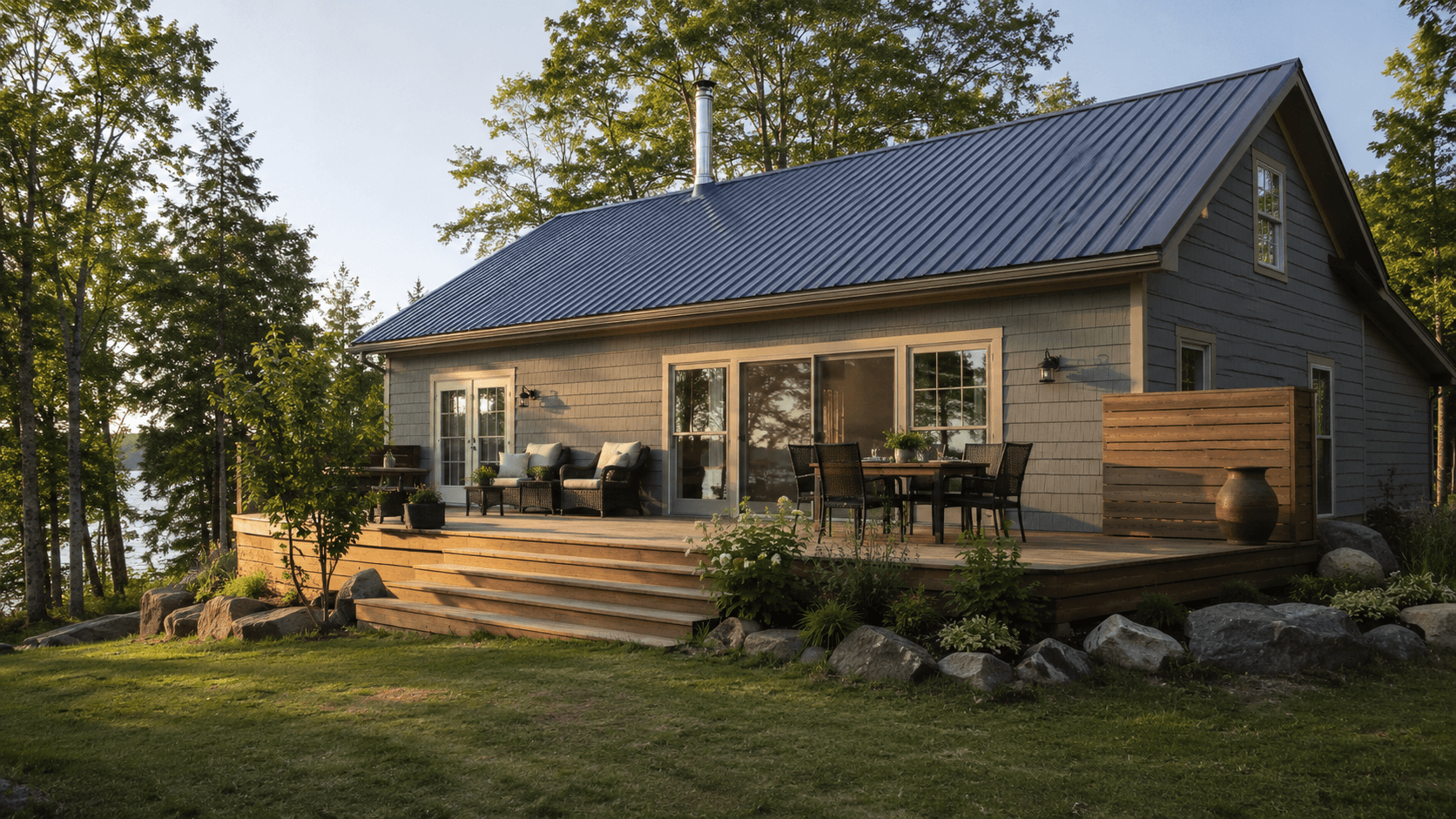
Think about arrival and storage before anything else.
Cottages collect coolers, boots, towels, coats, tools, firewood, paddles, and guest bags in a way a regular home rarely does. The entry sequence matters more than most people expect when they first start planning. A mudroom or covered entry that can handle wet gear, muddy boots, and a pile of life jackets will save you years of tracked-in mess and frustrated family members. This is one of those details that feels minor on paper and becomes the thing everyone appreciates every single weekend.
Design around the outside, not just the interior.
Decks, covered porches, lake or forest views, shade in the afternoon, bug protection, snow load, and access to the water or trail all shape how a cottage actually gets used through the year. A cottage with a beautiful interior and no real relationship to the outdoors misses the point of building on the property in the first place. Think about where the sun sits at dinner time, where the wind comes from, and where people will naturally want to sit with a coffee in the morning.
Keep the materials honest and low maintenance.
A cottage can be beautiful without becoming precious. Durable finishes, practical details, and easy maintenance help the place feel relaxing instead of fragile, especially if you are only up a few times a month and cannot babysit delicate materials year round. Think about how a surface handles being closed up all winter, how it responds to humidity and temperature swings, and how forgiving it is if someone tracks in sand or drops a fishing rod on the floor.
Plan for four season use, even if you start with three.
Many cottage owners start out using the property seasonally and end up wanting it year round within a few years. Building with proper insulation, a heating system that can handle Eastern Ontario winters, and water systems that will not freeze up can save a very expensive retrofit later. Even if you are not ready to commit to full four season use on day one, it is worth discussing with your builder what it would take, and pricing the difference before construction starts rather than after.
Understand shoreline and setback rules before you fall in love with a site plan.
Waterfront and forested properties in Hastings County and the surrounding region often come with shoreline setbacks, tree preservation rules, and conservation authority requirements that affect where you can actually build. These rules exist for good reasons, protecting water quality and the character of the area, but they can significantly change your site plan if you discover them late. A builder familiar with the local approval process can help you understand what is realistic on your specific lot before you get attached to a layout that will not be approved.
Think about how the cottage will handle being empty.
Unlike a primary home, a cottage often sits unattended for stretches of time, especially in the off season. Water shutoffs, proper winterization, pest-proofing, and simple systems that do not require constant maintenance all matter more here than in a home you live in every day. A cottage that is a hassle to close up and open each season becomes a chore instead of a getaway. Building these considerations in from the start is far easier than retrofitting them later.
Balance privacy with the way families actually gather.
Cottages tend to host more people at once than a typical home, extended family, friends for the weekend, kids and their friends. A layout that gives everyone a little bit of privacy while still having a real gathering space, usually the kitchen and the outdoor living area, tends to work better than a cottage designed like a scaled down version of a city house. Bunk rooms, flexible sleeping arrangements, and a great outdoor space often matter more than an extra formal room nobody uses.
Want to talk through your own project?
Send the rough idea and Matt can help make the next step clearer.