
How to start planning a custom home in Hastings County
The best first step is not picking every finish. It is getting clear on land, lifestyle, budget, and the kind of builder conversation that will make the project feel real.
8 min read
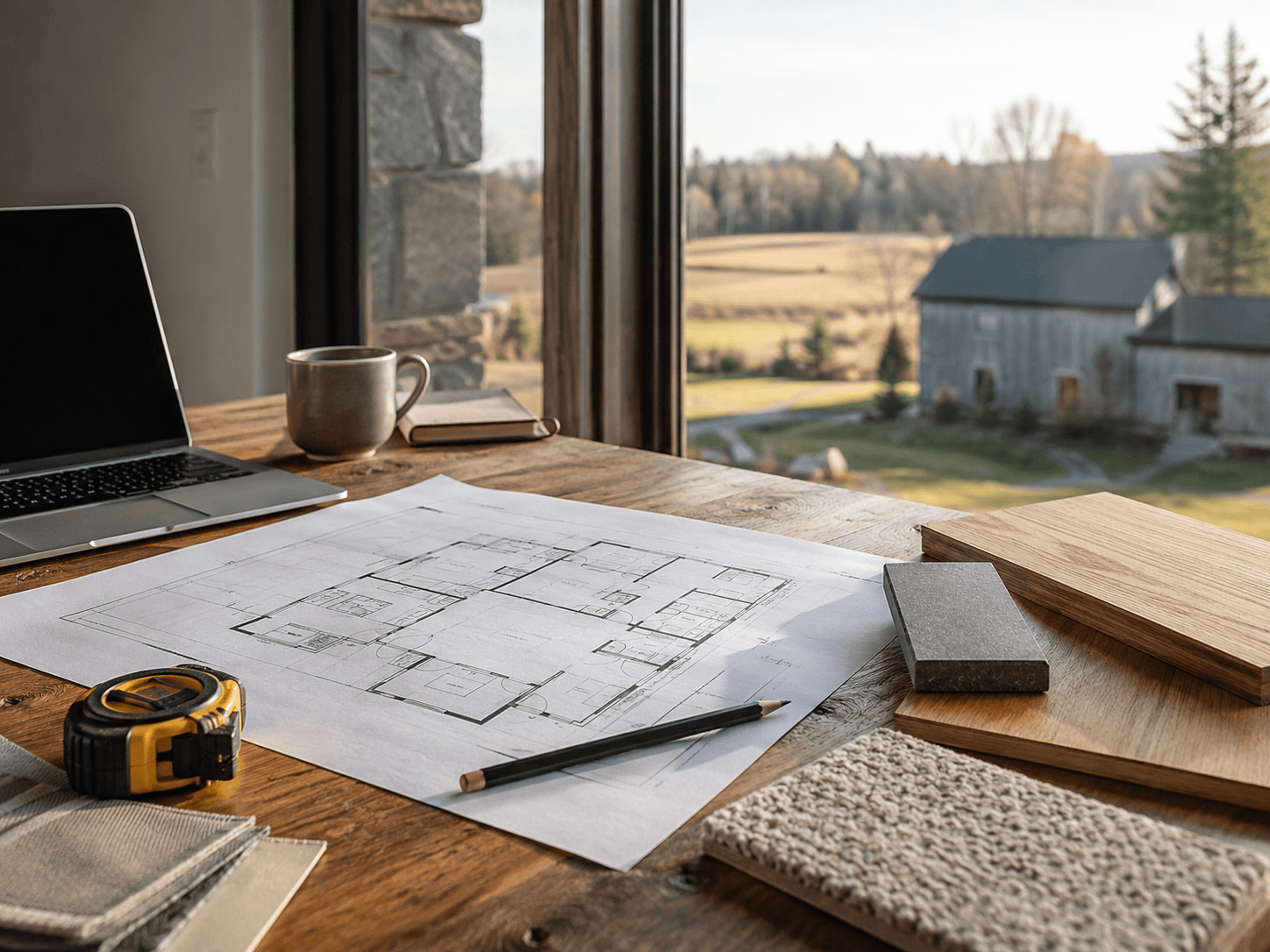
Start with the life, not the floor plan.
A good custom home should fit your routines before it impresses anyone else. Before you look at a single floor plan, think about mornings, storage, guests, muddy boots, views, pets, aging parents, weekend meals, and where people naturally gather. Most homeowners start by picking a style off Pinterest and then try to force their life into it. It works better the other way around. Once you know how you actually use a space, room by room, the layout almost designs itself, and you avoid paying for square footage that looks nice but never gets used.
Get honest about budget before you fall in love with finishes.
It is easy to get attached to a kitchen island or a stone exterior before you know what the whole project actually costs. A realistic custom home budget should include the land work, the foundation, the mechanical systems, permits, contingency for surprises, and only then the finishes. Talking about numbers early is not a way to kill the dream, it is how you protect it. A builder who is comfortable having that conversation up front is doing you a favor, because it means fewer painful decisions later when the budget is already stretched thin.
Let the property shape the build.
Access, grade, trees, water, driveway location, sun exposure, septic placement, and service runs can all change what is practical on a piece of land. Two homeowners with the same dream house can end up with very different builds once the property gets involved. A steep lot might mean a walkout basement makes more sense than a slab. A treeline might decide where the primary windows go, long before you think about interior design. A builder who visits the site early, before drawings are finalized, saves you from redesigning around a problem that could have been caught on day one.
Understand the real timeline before you get attached to a move-in date.
Custom home timelines in Eastern Ontario depend on permitting, weather windows, trade availability, and how far along the design is before ground gets broken. A realistic conversation about timeline should cover design and permitting time, not just the months of actual construction. Homeowners who go in expecting a rushed schedule are often the ones who end up frustrated partway through. A builder who gives you a grounded, honest timeline, including the slow parts, is easier to trust than one who promises a date that sounds too good to be true.
Bring rough ideas sooner than you think.
You do not need a perfect drawing to start a conversation with a builder. Photos, notes, a wish list, and a few honest worries can be enough to turn vague excitement into useful next steps. Some of the best custom home projects start with a homeowner saying something like, we want a big kitchen that opens to the yard, and we are worried about resale if we go too custom. That is plenty to work with. Waiting until everything feels perfectly planned usually just delays the parts of the process that actually need the most lead time, like permitting and design.
Ask about the permit and approval process early.
Hastings County and the surrounding municipalities each have their own building department timelines, septic approval requirements, and setback rules depending on the property. This part of the process is not glamorous, but it is where a lot of projects lose weeks if nobody is paying attention. A builder who is familiar with the local process, who knows what the township typically asks for and how long approvals tend to take, can keep this stage from becoming the reason your build stalls before it even starts.
Think about how the home will age with you.
A custom home is a chance to plan further ahead than a typical renovation allows. That might mean a main floor primary bedroom for down the road, a mudroom that can handle a growing family, or wiring that is ready for future upgrades without opening walls again. You do not have to build every future need into the home today, but it is worth a real conversation about which decisions are cheap to plan for now and expensive to add later. Structural choices, plumbing rough-ins, and stair placement are usually the ones worth thinking through early.
Choose a builder who explains tradeoffs, not just costs.
Almost every decision in a custom home build is a tradeoff. Bigger windows mean more heating cost. A more complex roofline looks striking but adds labor and time. A builder worth working with will walk you through what you are actually trading, not just hand you a price and move on. That kind of clarity is what makes the difference between a homeowner who feels informed through the process and one who feels like decisions are happening to them instead of with them.
The first conversation is lower stakes than it feels.
Most people put off calling a builder because they feel like they need to have it all figured out first. In reality, the first conversation is where a lot of that figuring out actually happens. Bring your questions, your worries about budget, and your rough ideas. A good builder will help you leave that conversation with a clearer next step, not a sales pitch.
Want to talk through your own project?
Send the rough idea and Matt can help make the next step clearer.