
What to ask before a kitchen renovation
A kitchen renovation works best when the pretty choices are backed by better layout, better storage, and a plan for how your home will function during the work.
7 min read
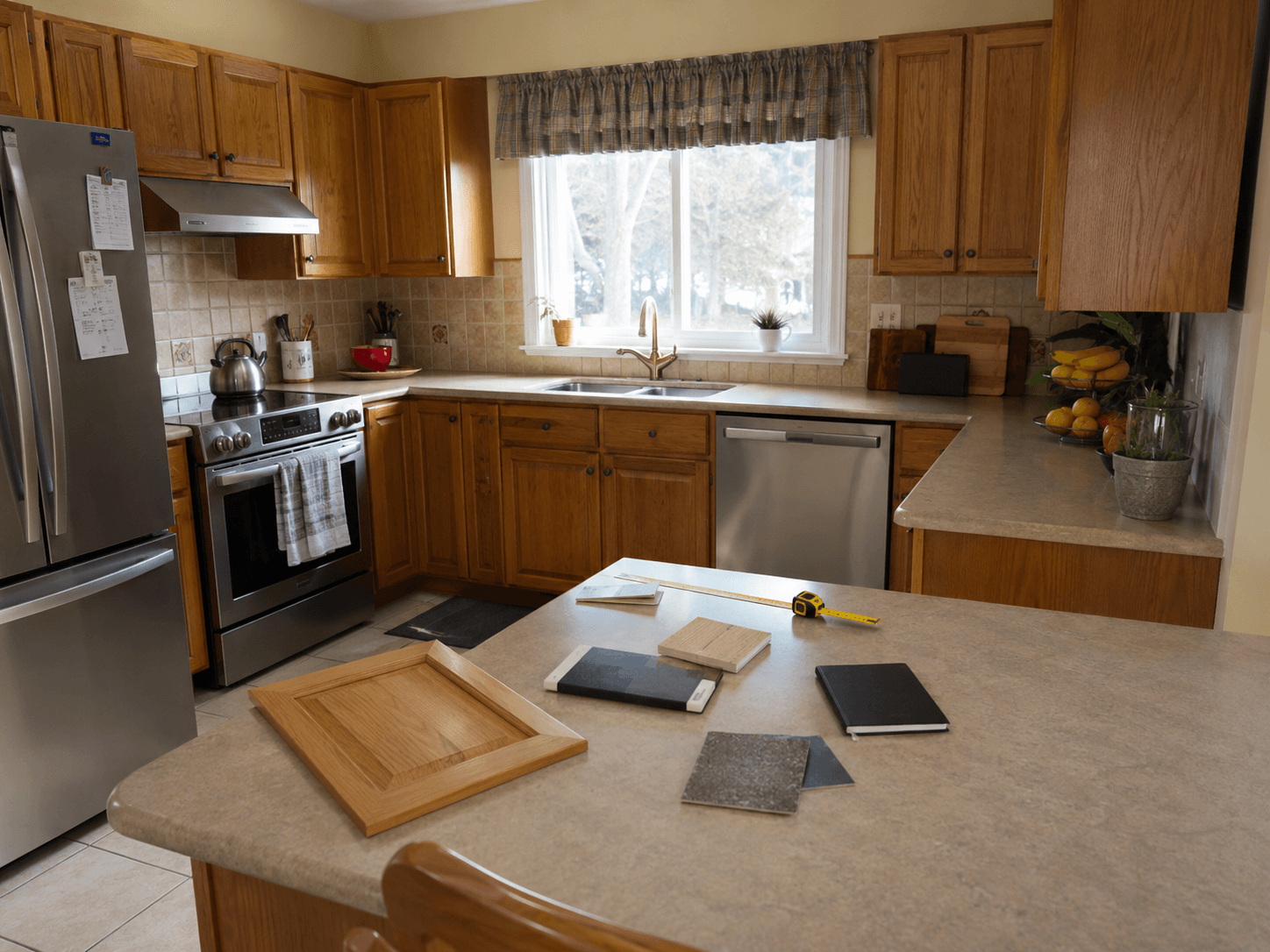
Ask what is actually bothering you.
Before anyone talks cabinet color or countertop material, the real question is simpler. Is it storage, lighting, flow, the island, the way people cross paths at dinner time, or the fact that the room just feels tired and dark. The strongest renovations start by naming the daily friction, not the Pinterest board. A kitchen that solves a real problem, like a dead-end counter nobody can use or a fridge door that hits the pantry, will feel better to live in than one that just looks updated in photos.
Talk about disruption early, not once demolition starts.
A kitchen is one of the hardest rooms in a home to lose for weeks at a time. A good renovation plan should explain access during construction, dust control, sequencing of trades, and how your family will actually eat and live through the messy middle part. Some homeowners set up a temporary kitchen in a dining room or basement. Others plan the renovation around a slower season. Either way, this conversation belongs at the start of the project, not as a surprise once the cabinets are already out.
Make the room work before it poses for photos.
Finishes matter, and a beautiful kitchen is a real goal. But a kitchen that photographs well and quietly annoys you every single morning is not actually a win. Storage, counter clearances, lighting placement, appliance locations, and durable surfaces deserve just as much attention as the color palette. Ask your contractor to walk through your actual daily routine with you, where the coffee gets made, where groceries land, where the kids do homework, before finalizing the layout.
Get clear on what is behind the walls.
Older homes in Hastings County often hide surprises once cabinets and drywall come down: outdated wiring, plumbing that does not meet current code, or framing that needs reinforcement. A realistic renovation budget includes a contingency for exactly this kind of discovery. A contractor who is upfront about the possibility of surprises, and who has a plan for how change orders get communicated, is protecting you from the two things homeowners hate most in a renovation: budget shock and radio silence.
Decide how far the renovation actually needs to go.
Not every kitchen renovation needs to gut the room to the studs. Sometimes new cabinet fronts, updated lighting, and a smarter island solve most of the frustration for a fraction of the cost and disruption of a full renovation. Other times, the layout itself is the problem, and a partial renovation would just be putting a nicer coat of paint on a room that still does not work. A good contractor will tell you honestly which situation you are in, even if the smaller answer means a smaller job.
Ask about lighting the way you would ask about layout.
Lighting gets treated as an afterthought far too often, and it is one of the fastest ways to make or break a kitchen renovation. Task lighting over counters, layered lighting instead of one central fixture, and natural light from windows or a well-placed door all change how the room feels day to day. A kitchen with beautiful finishes and flat, single-source lighting will still feel unfinished. This is worth a real conversation with your contractor before the electrical rough-in, not after.
Think about resale, but do not let it run the whole decision.
A kitchen renovation is one of the projects most likely to affect resale value, so it is worth a moment of thought even if you are not planning to sell soon. That said, building a kitchen purely for a hypothetical future buyer, instead of the way your own family actually cooks and gathers, usually leads to regret. The better approach is to make durable, timeless choices in materials and layout, while still designing the space around how you actually live in it today.
Ask how the timeline and budget will actually be communicated.
The single biggest predictor of a stressful renovation is not the scope of work, it is how well updates get communicated once the work starts. Ask your contractor directly: how will I know what is happening each week, who do I call if something comes up, and how do changes to cost or timeline get shared with me. A contractor who has a clear, honest answer to that question is usually the one who will make the renovation feel manageable instead of chaotic.
Want to talk through your own project?
Send the rough idea and Matt can help make the next step clearer.